

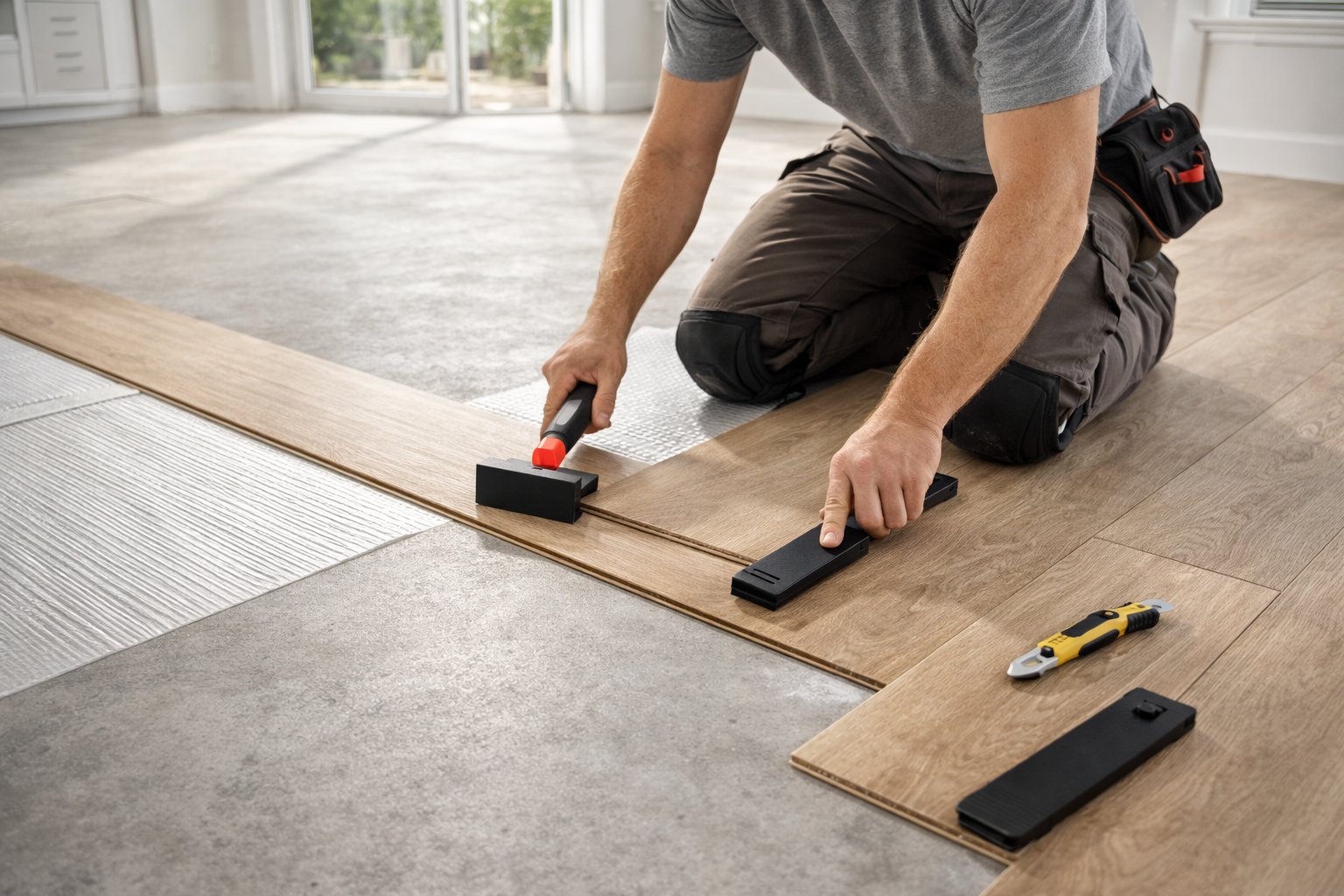
Concrete slabs show up everywhere across Mid-Missouri—basements, walkouts, lake homes, and slab-on-grade builds. Luxury vinyl flooring is often the smart match for these spaces because it handles daily life well, resists moisture better than many traditional materials, and delivers realistic wood- and stone-look designs without constant upkeep.
But concrete has its own rules. A slab can look dry and smooth while still releasing moisture vapor. It can be “mostly flat” and still cause click-lock planks to flex, separate, or sound hollow. A great-looking luxury vinyl floor starts with slab prep that’s done on purpose—not rushed, not guessed.
Concrete’s hidden personality
A concrete slab is not a static surface. It holds moisture, it breathes, and it can shift slightly with seasonal temperature changes. Old slabs may have leftover adhesive residue from previous flooring. Newer slabs may still be curing, even months after the pour.
Luxury vinyl is durable, but it’s not a magic blanket. If the slab underneath is damp, uneven, or dusty, the floor above can fail early—sometimes without obvious warning until edges curl, joints open, or discoloration appears.
The concrete slab checklist
Moisture testing comes first
Before a single plank is opened, moisture should be measured using a recognized method and compared against the flooring manufacturer’s limits. This step determines whether the slab is ready, whether a vapor barrier is needed, or whether mitigation is required.
Skipping moisture testing is one of the fastest ways to end up with a floor that looks fine at first—and then develops problems later. It can also affect product warranty coverage.
Flat beats “level” every time
A slab doesn’t have to be perfectly level, but it does need to be flat. Even small ridges and dips can telegraph through luxury vinyl over time, especially in rigid-core click systems where the locking edges need steady support.
Common fixes include:
Grinding high spots
Filling low spots with an appropriate patch or self-leveling underlayment
Removing old adhesive and paint overspray
Cleaning dust thoroughly so underlayment and primers bond correctly
Flatness standards vary by product, so the target should align with the flooring installation requirements—not a generic rule of thumb.
Crack decisions that protect the finish
Hairline cracks are common and often manageable. Wider cracks, height differences, or cracks that show signs of movement deserve more attention. The goal is preventing movement from transferring into the finished floor.
A stable repair plan may include crack isolation steps, patching, and careful surface prep so the flooring system stays supported across the repaired area.
Picking the right luxury vinyl for slab spaces
Matching the core and thickness to the job
Luxury vinyl isn’t one single product type. Core construction, thickness, and backing all affect how it performs over concrete. Rigid-core options can help reduce the feel of minor subfloor imperfections, while glue-down products can offer a more solid, anchored feel for certain spaces.
A useful way to compare performance traits—durability, waterproof performance, and comfort underfoot—is reviewing a dedicated overview of luxury vinyl flooring and then matching that information to the room’s needs (basement family room vs. kitchen vs. hallway traffic, for example).
Underlayment and attached pads
Many click-lock luxury vinyl products include an attached pad. Adding an additional soft underlayment on top of that can sometimes cause too much “give,” stressing the joints and creating separation. Concrete installations should follow the product’s exact underlayment guidance, especially when moisture vapor control is part of the system.
If the product requires a separate underlayment, choosing one that supports sound reduction, minor smoothing, and vapor resistance—without over-cushioning—keeps the floor stable.
Installation choices that avoid common failures
Floating floors: expansion space matters
Floating click-lock installations are popular because they install cleanly and can be replaced more easily than glued floors. But they demand precise spacing and thoughtful transitions.
Key details that matter:
Proper expansion gaps at all walls and fixed objects
Correct locking technique (no forced joints)
Staggered end joints for stability and appearance
Transitions planned for doorways and long runs
If expansion gaps get blocked by baseboard pressure, tight door jambs, or heavy fixtures, the floor can buckle or tent.
Glue-down systems: clean slab discipline
Glue-down luxury vinyl can be a strong choice for wide-open floor plans, heavy traffic, or spaces where a firmer feel underfoot is preferred. The slab must be clean, properly primed if required, and compatible with the adhesive system.
Glue-down success relies on:
The right trowel notch and spread rate
Correct open time and working time
Rolling the floor properly after placement
Keeping traffic off until cure times are met
A rushed adhesive install can lead to bubbles, shifting tiles/planks, or long-term bond failure.
Detail work that makes the room feel finished
Doorways, trims, and transitions
Concrete rooms often connect to other surfaces—carpet, tile, or hardwood in adjacent areas. A clean transition plan prevents exposed edges and protects flooring from chipping at thresholds.
In rooms that connect to existing ceramic or porcelain installations, coordinating heights and transition profiles becomes easier when a complementary material reference is on hand, such as tile flooring (especially useful for planning mixed-surface areas like kitchens, mudrooms, and bathrooms).
Baseboards and quarter round done neatly
Baseboards should cover expansion space without pinning the floor down. Quarter round can help in remodel situations, but a clean finish depends on careful cuts, tight corners, and consistent paint or stain touch-ups.
A long-lasting result starts under the surface
Luxury vinyl over concrete can look incredible and perform for years—when moisture is tested, the slab is flattened correctly, and the installation method matches the space. The “invisible” steps (testing, prep, and planning) are what keep planks tight, surfaces quiet, and rooms comfortable season after season.
Schedule a professional install consultation
For homes in Sedalia, Laurie, Osage Beach, and Bolivar, expert design guidance and installation support can make slab installations straightforward and stress-free. Call the Sedalia showroom or request an appointment through schedule an in-home consultation.


