

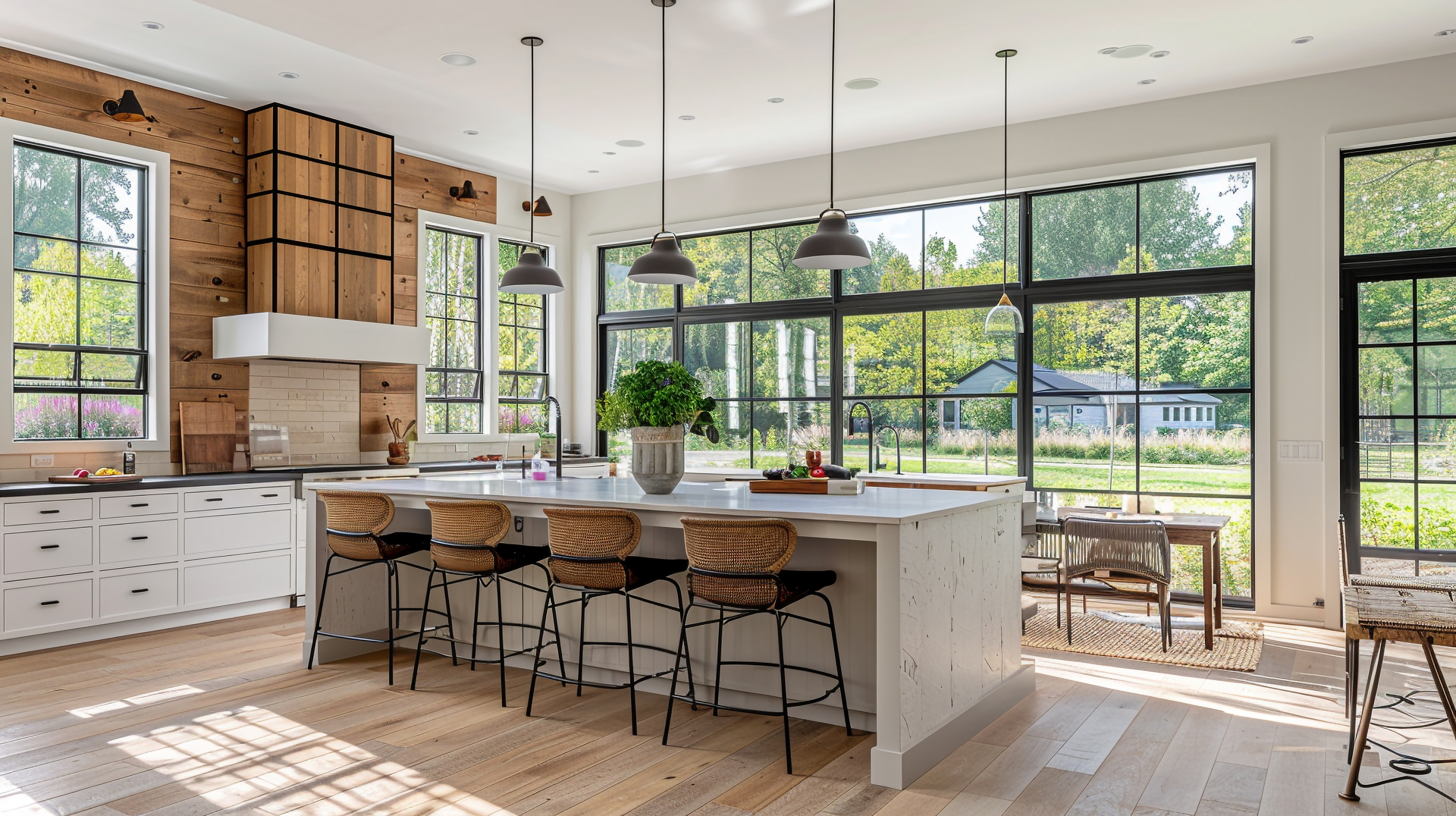
Hardwood floors and kitchens do not always get mentioned in the same sentence. For years, kitchens were considered off-limits for wood due to moisture, spills, and heavy traffic. Yet today, more homeowners are intentionally choosing hardwood in kitchen spaces to create a seamless, warm, and timeless look. Like any design decision, installing hardwood floors in a kitchen comes with both advantages and trade-offs. Understanding these clearly makes it easier to decide whether hardwood truly fits the way a kitchen is used day to day.
Where hardwood fits into today’s kitchen layouts
Hardwood flooring has an unmatched ability to bring character into a space. In kitchens, that warmth often balances out stone countertops, tile backsplashes, and stainless appliances.
One major appeal is visual continuity. Open-concept homes benefit greatly when the same hardwood flooring flows from living areas straight into the kitchen. This continuity can make the entire home feel larger, calmer, and more thoughtfully designed.
Hardwood also ages with personality. Subtle wear, gentle patina, and natural grain variation can add charm rather than detract from it, especially in kitchens designed for gathering rather than perfection.
The everyday benefits hardwood brings to kitchens
From a comfort standpoint, hardwood feels noticeably better underfoot than tile or stone. Standing for long periods while cooking or hosting becomes less tiring, especially in busy households.
Hardwood floors also support flexibility in kitchen design. Cabinets, islands, and appliances can be updated years later without needing to rework complex tile layouts. If tastes change, hardwood can be refinished instead of replaced, extending its lifespan far beyond many other flooring options.
For homeowners thinking long term, hardwood often contributes positively to resale appeal. Many buyers still associate wood flooring with quality and permanence, even in kitchen spaces.
Moisture reality and why it matters
The biggest concern with hardwood floors in kitchens is moisture. Spills, leaks, wet shoes, and pet bowls all introduce water where wood naturally prefers dryness.
While brief spills wiped up quickly are usually not an issue, prolonged moisture exposure can cause swelling, cupping, or warping. Dishwashers, refrigerators with ice makers, and sink plumbing all add risk points that require careful attention.
This does not mean hardwood automatically fails in kitchens. It simply means habits matter. Prompt cleanup, quality finishes, and proper installation techniques play a major role in long-term performance.
How kitchen traffic impacts wood flooring
Kitchens are high-traffic zones. Chairs slide, stools scrape, and dropped utensils are inevitable. Hardwood can handle this activity, but expectations should be realistic.
Softer wood species may dent more easily, while harder species resist marks better but still show wear over time. Area rugs in work zones and felt pads under furniture go a long way in reducing surface damage without hiding the beauty of the floor.
Some homeowners appreciate visible wear as part of the story of the home. Others prefer a more polished look. Knowing where expectations fall helps determine whether hardwood is the right emotional fit for a kitchen.
Solid vs engineered hardwood in kitchen settings
Not all hardwood floors behave the same way. Solid hardwood is milled from a single piece of wood, making it more sensitive to moisture and humidity changes.
Engineered hardwood, on the other hand, is built in layers. This structure gives it greater dimensional stability, which can be especially valuable in kitchens where temperature and humidity fluctuate.
For many kitchens, engineered hardwood offers the appearance of real wood with added peace of mind. The choice often depends on subfloor conditions, climate, and lifestyle rather than aesthetics alone.
Maintenance expectations homeowners should consider
Hardwood kitchen floors require mindful maintenance, but not excessive upkeep. Regular sweeping prevents grit from scratching the surface, and occasional damp mopping keeps the floor looking fresh when done properly.
Harsh cleaners, soaking wet mops, and steam cleaners should be avoided. Protective mats near sinks and entry points help manage daily wear without sacrificing style.
Periodic refinishing or recoating may be needed over time, especially in heavily used kitchens. The upside is that hardwood allows renewal rather than full replacement, which many homeowners see as a long-term advantage.
When hardwood may not be the best kitchen choice
Hardwood may not be ideal for households with frequent water spills, young children learning kitchen independence, or pets that regularly track in moisture. In these cases, alternatives that mimic wood visuals while offering greater water resistance might be a better fit.
Homes with uneven subfloors or chronic humidity issues may also require extra planning before committing to hardwood in the kitchen. A professional evaluation helps prevent future issues and costly repairs.
Balancing beauty and practicality
Installing hardwood floors in a kitchen is less about right or wrong and more about alignment with lifestyle. For homeowners who value warmth, continuity, and long-term character, hardwood can be a rewarding choice when installed and cared for correctly.
Understanding both the strengths and limitations allows expectations to stay realistic. When those expectations match how the kitchen is actually used, hardwood often performs beautifully for decades.
Talk through hardwood kitchen options with our flooring experts today!
Dugan’s has been a trusted flooring company in Mid-Missouri since 1871, proudly serving Sedalia, Laurie, Osage Beach, and Bolivar for seven generations. As flooring experts, we help guide hardwood and engineered wood selections that align with real-life kitchen use, design goals, and long-term durability. Visit our showroom or schedule a consultation to start planning a kitchen floor that truly fits the way your home works.


