

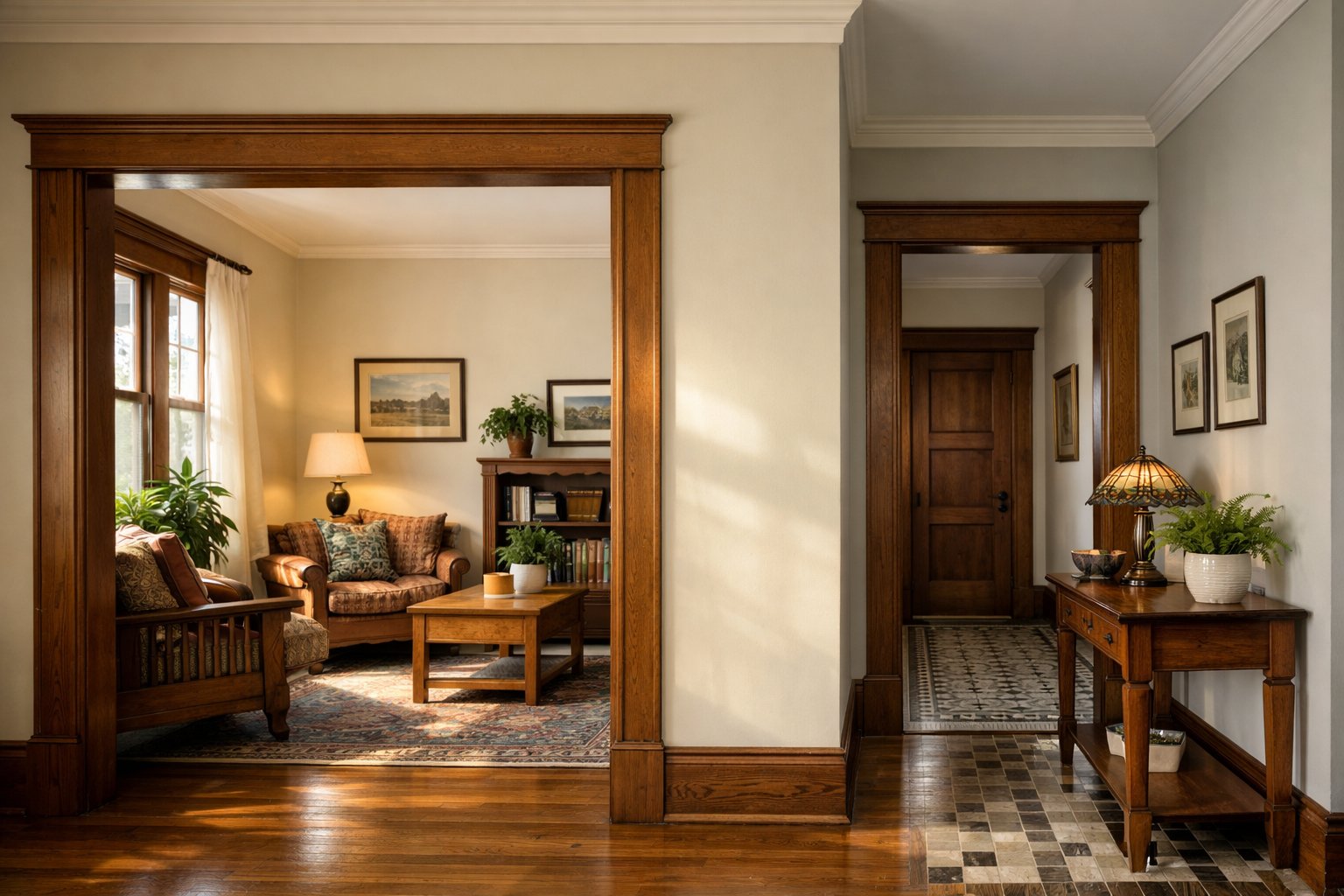
In many older homes across Sedalia, paint does far more than refresh a room. It interacts with plaster walls, aged trim, historic woodwork, and lighting conditions that behave very differently than those in modern construction. That is where undertones quietly take center stage. While two paint colors may look identical on a sample card, the hidden undertones beneath them can dramatically change how a space feels once the paint is on the wall—especially in homes built decades ago.
Understanding undertones is not about chasing trends. It is about respecting the structure, materials, and light patterns that define older Sedalia homes and choosing finishes that work with them instead of against them.
The difference between color and undertone
Paint color is what shows up at first glance. Undertone is the subtle hue underneath—often warm, cool, or neutral—that emerges once paint interacts with light and surrounding surfaces. A beige may lean pink, yellow, or gray. A white may quietly pull blue or cream. These shifts are easy to miss in a store and impossible to ignore once an entire room is painted.
In newer homes with uniform drywall and abundant lighting, undertones tend to behave predictably. In older homes, the story changes.
How aging materials influence paint undertones
Many Sedalia homes built before the mid-20th century feature plaster walls, original hardwood trim, and layered architectural details. These materials absorb and reflect light unevenly. Plaster often has subtle texture and mineral variation, which can amplify undertones that would otherwise stay hidden.
Wood trim aged over decades tends to warm naturally, pulling yellow or red tones forward. When paired with a paint color that has a competing undertone, the result can feel mismatched or unintentionally dated. Undertone awareness helps prevent these clashes and keeps original features feeling intentional.
Natural light behaves differently in older floorplans
Older homes were designed long before open-concept layouts became popular. Smaller rooms, narrower hallways, and fewer windows mean light moves differently throughout the day. North-facing rooms may emphasize cool undertones, while west-facing spaces can exaggerate warmth in the evening.
Paint undertones react to these shifts. A neutral gray that feels balanced at noon can turn blue by dusk or green by morning. Evaluating undertones in the context of real, changing light is essential in historic Sedalia interiors.
Why “safe neutrals” often fail in historic homes
Many homeowners gravitate toward popular neutrals assuming they are foolproof. In older homes, these shades are often the most revealing. Grays with green undertones can feel muddy against aged wood. Whites with stark blue bases can appear harsh beside plaster walls.
Selecting finishes through a curated range of thoughtfully balanced paint colors helps avoid these issues. When undertones are considered early, neutrals become grounding instead of distracting.
Undertones and the emotional feel of a room
Undertones influence more than aesthetics—they affect mood. Warm undertones can enhance the welcoming character of older living rooms and dining spaces. Cooler undertones may suit bedrooms or offices but need careful handling to avoid feeling cold or sterile in traditional architecture.
Historic homes already carry emotional weight through their craftsmanship and layout. Paint undertones should support that atmosphere rather than fight it.
Coordinating paint with original details
Many older Sedalia homes feature elements worth preserving, such as crown molding, built-ins, fireplaces, and decorative doors. Paint undertones should connect these features visually, not isolate them.
Soft warm undertones often pair better with stained wood and aged finishes. In rooms where patterns or textures are introduced through wallpaper, undertones play a critical role in preventing visual overload. When the undertone palette is cohesive, even bold design choices feel balanced.
Why testing paint samples matters more than ever
Sample boards are helpful, but in older homes, testing directly on multiple walls is far more revealing. Undertones shift depending on wall orientation, ceiling height, and adjacent rooms. A color that works beautifully in one corner may fall flat in another.
Evaluating undertones in real conditions saves time, money, and frustration—and leads to results that feel timeless rather than trendy.
Choosing paint that respects the home’s history
Older Sedalia homes were built with longevity in mind. Paint selections should reflect that same mindset. Undertones that harmonize with existing materials help preserve architectural integrity while still allowing spaces to feel updated.
Rather than asking whether a color is popular, it is worth asking whether its undertone belongs in the home.
Bringing everything together with confidence
Paint undertones may be subtle, but their impact is anything but. In older Sedalia homes, they influence how rooms connect, how original features stand out, and how comfortable a space feels year after year. Taking the time to understand undertones leads to paint decisions that age gracefully—just like the homes themselves.
For paint guidance that truly fits the character of older Sedalia homes, we’re here to help. Our team understands how undertones interact with historic materials, natural light, and original details, making color selection feel confident instead of overwhelming. Reach out through our Contact Us page to schedule a consultation and let us help bring the right balance of warmth, depth, and timeless style into the home.


